
 Family Office Alliance


Cash Exchange
Give cash settlement a documented basis.
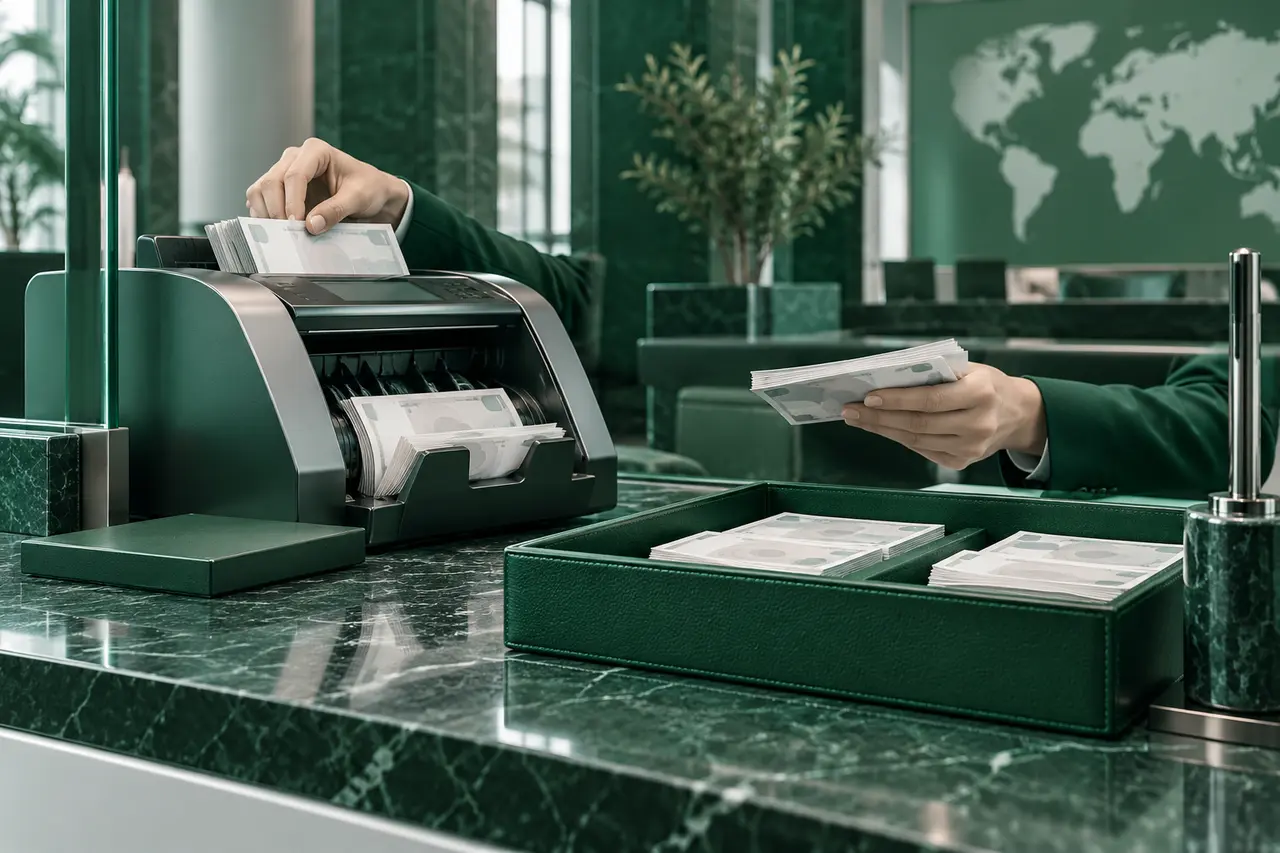
Understand the service. Clarify conditions. Prepare the next step.
Cash verification, exchange and acceptance
Coordinate cash authenticity, ownership, source evidence and delivery conditions with verification, acceptance, exchange and bank-receipt needs. Align receiving institutions, quotations, transport, insurance and records in one execution checklist.
- Which parties and banks are involved?
- Are sources and rights clear?
- What outcome is needed?
- What are the currency, amount, timing and conditions?
Six workstreams connect review and execution.
- 01Currency and note assessment
Document currency, denominations, quantity, location and condition.
- 02Ownership and sources
Connect holder identity, authority, acquisition records and SOF/SOW evidence.
- 03Acceptance coordination
Review receiving entities, scope, inspection methods and written conditions.
- 04Quotation and costs
Discuss quotations, service fees, transport and verification costs by currency and location.
- 05Delivery stages
Coordinate inspection, transport, insurance, payment sequence and responsibilities.
- 06Receipt and records
Reconcile acceptance, exchange and receipt evidence and record exceptions.
An evidence index, open questions, condition and cost checklist, participants, responsibilities and execution stages for this specific matter.
From evidence to an arrangement.
Identify
Clarify objectives, purpose and timing.
Document
Match rights, sources and records.
Assess
Review institution and professional requirements.
Coordinate
Define responsibilities, stages and ongoing records.
Questions worth clarifying.
Service-specific questions about terms, evidence and execution.
What information is useful initially?
Start with currency, amount range, location, holder and acquisition method. Provide sensitive records after agreeing recipients and secure delivery.
How do exchange and acceptance differ?
Exchange addresses currency conversion and price. Acceptance addresses whether a receiving institution will take the notes and on what terms. Evidence must align.
Are photographs sufficient verification?
Photos support an initial review of denomination and appearance. Physical or institution-approved verification is still needed, with exception procedures agreed beforehand.
Why organise SOF or SOW evidence?
Explain how the cash was obtained, who holds it and its purpose. Distinguish this transaction’s funding from the wider wealth history.
Does location affect the arrangement?
Location affects receivers, logistics, insurance, inspection and reporting considerations. Relevant local professionals should review conditions before delivery is planned.
How should quotations be compared?
Separate exchange pricing, service fees, inspection, transport, insurance and other necessary costs. Identify who pays each cost and when.
How are delivery responsibilities defined?
Document inspection location, custody, transport cover, payment stages and exceptions. Confirm the order of cash and fund delivery with participants.
Which records should be retained?
Keep verification, acceptance, exchange, payment, receipt and fee records. Reconcile differences and document parties, timing, currency and delivery outcomes.